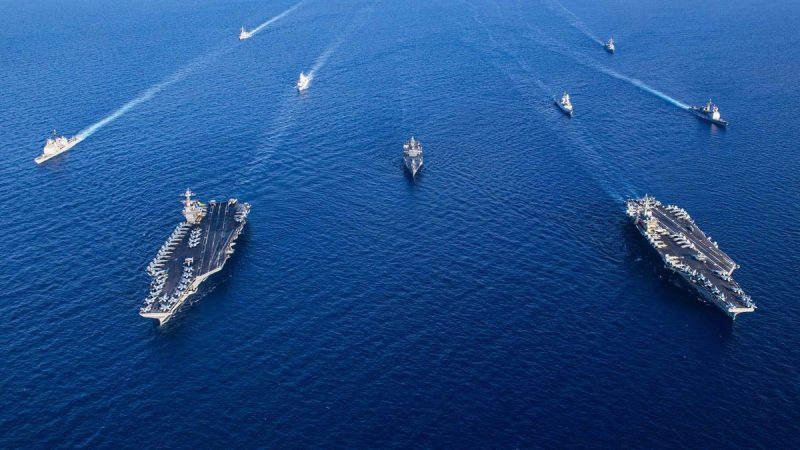
Taiwan unveils $40B defense spending plan to counter China military threat over next decade
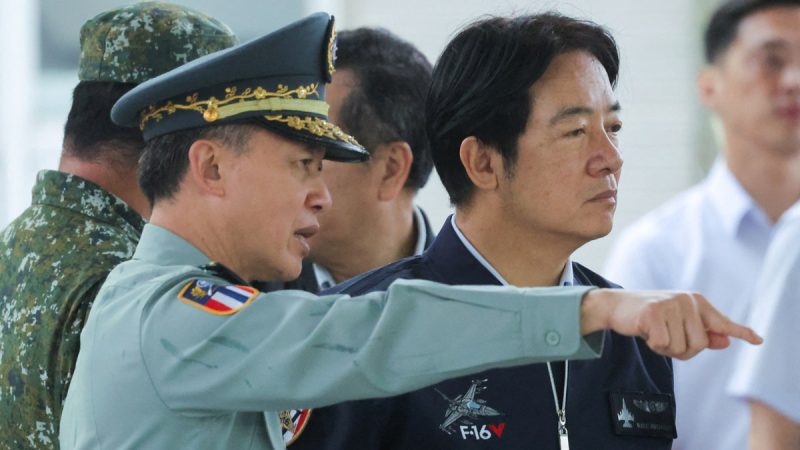
: Last week, Taiwan President William Lai unveiled a massive $40 billion supplemental defense procurement proposal, casting it as proof that the independently ruled, democratic island is serious about countering escalating military pressure from the People’s Republic of China (PRC). The PRC has not governed Taiwan for even a single day but claims it as its territory.
A State Department spokesperson told Fox News Digital that, ‘We welcome Taiwan’s announcement of a new $40 billion special defense procurement budget. Consistent with the Taiwan Relations Act and more than 45 years of commitment across multiple U.S. Administrations, the United States supports Taiwan’s acquisition of critical defense capabilities, commensurate with the threat it faces.’
The spokesperson also commended Taipei, ‘We also welcome the Lai administration’s recent commitments to increase defense spending to at least 3% of GDP by 2026 and 5% of GDP by 2030, which demonstrates resolve to strengthen Taiwan’s self-defense capabilities.’
The American Institute in Taiwan (AIT) – the de facto American embassy – responded very positively almost immediately after Lai’s proposal was announced. Courtney Donovan Smith, a political columnist for the Taipei Times, told Fox News Digital that the strong support from AIT, ‘Amounts to a public American stamp of approval.’
A day after Lai’s announcement, Taiwan’s Defense Minister, Wellington Koo, told the media that preliminary talks have already been held with the United States about the kinds of weapons it wants to buy as part of this budget that would run from 2026 to 2033. But Koo said he could not make any details of discussions public until Congress receives a formal notification.
Yet some in Taiwan expressed concern that the language from the administration was somewhat understated, and didn’t come from senior-enough officials.
Those worried about what they perceive as a muted tone from the Trump administration wondered if the timing could be sensitive, coming shortly after President Trump and Chinese leader Xi Jinping agreed to a trade deal, and just days after Xi phoned Trump to reiterate Beijing’s claims over Taiwan, claims the U.S. ‘acknowledges’ but does not accept.
Even so, Taipei-based political risk analyst and Tamkang University assistant professor Ross Feingold told Fox News Digital that U.S. support fundamentally has not shifted and that when it comes to U.S. weapons sales to Taiwan, ‘If Taiwan is a willing buyer, the Trump administration is likely to be a willing seller.’
Also causing distress to the fragile egos of China’s communist leaders is Japan’s new Prime Minister Sanae Takaichi, a conservative who became Japan’s first female prime minister in October. She appeared to break long-standing Japanese strategic ambiguity over Taiwan when, asked on Nov. 7 in parliament whether a Chinese attack on Taiwan would qualify as ‘a situation threatening Japan’s survival.’
Takaichi didn’t deflect with a ‘I don’t comment on hypotheticals.’ Instead, she said, ‘If there are battleships and the use of force, no matter how you think about it, it could constitute a survival-threatening situation.’
Under Japan’s 2015 security law, that designation could allow Japanese military action in defense of an ally.
China predictably lashed out, immediately calling her remarks ‘egregious.’ A Chinese diplomat in Osaka escalated further, reposting coverage on X with a threat-like warning: ‘The dirty head that sticks itself in must be cut off.’
Kerry K. Gershaneck, a visiting scholar at National Chengchi University and a former U.S. Marine counterintelligence officer, told Fox News Digital that the U.S. needed to clearly denounce China for threats against Japan and the Japanese prime minister. Gershaneck warned that Asian allies remember past U.S. abandonment’ under what he called the ‘do not provoke China!’ policy of the Obama administration. ‘Unless high-level Washington officials signal stronger support, he said, ‘the Trump 47 administration risks going down in history as Barack Hussein Obama’s third term.’
Feingold noted that while Takaichi’s stance was enthusiastically received in Taiwan, the excitement ‘was unsustainable and not based on a formal policy decision by Japan to defend Taiwan.’
Following reports that President Trump phoned the Japanese prime minister and requested that she dial down talk about Taiwan, Japan’s Chief Cabinet Secretary Kihara Minoru issued a strong denial, saying Trump did not advise Takaichi to ‘temper the tone of her comments about Taiwan.’
While the geopolitical shifts grabbed headlines, Lai’s real challenge is domestic. Taiwan has a single-chamber legislature, and Lai’s Democratic Progressive Party does not have a majority.
Cheng Li-wun, the new chair of the main opposition Kuomintang (KMT), campaigned against boosting defense spending to 5% of GDP and has repeatedly argued Taiwan is ‘not an ATM’ for ‘unreasonable’ military budgets. The KMT supports renewed engagement with Beijing and acceptance of the ‘1992 Consensus,’ a proposed framework that allows both sides to claim there is ‘one China’ while interpreting the meaning differently. Lai rejects that position entirely, calling it a path toward subordination to China.
Bryce Barros, associate fellow at GLOBSEC and a former U.S. Senate national security advisor, told Fox News Digital that there are serious hurdles. ‘Opposition leaders have cited cuts to other essential services like healthcare, lack of details on how the budget will be paid for and concerns over more hostilities with China,’ he said. But Barros said the head of the de facto American embassy has called for bipartisan support for the bill, and he noted Lai needs only six opposition defections for the vote to pass.
Analysts also stress the proposal is not solely for U.S. weapons. Lai wants major investment in domestic defense manufacturing, including a ‘dome’ anti-missile system, which could help blunt accusations of excessive spending to curry favor with Washington. But the plan still faces a volatile parliament and certain retaliation from China.