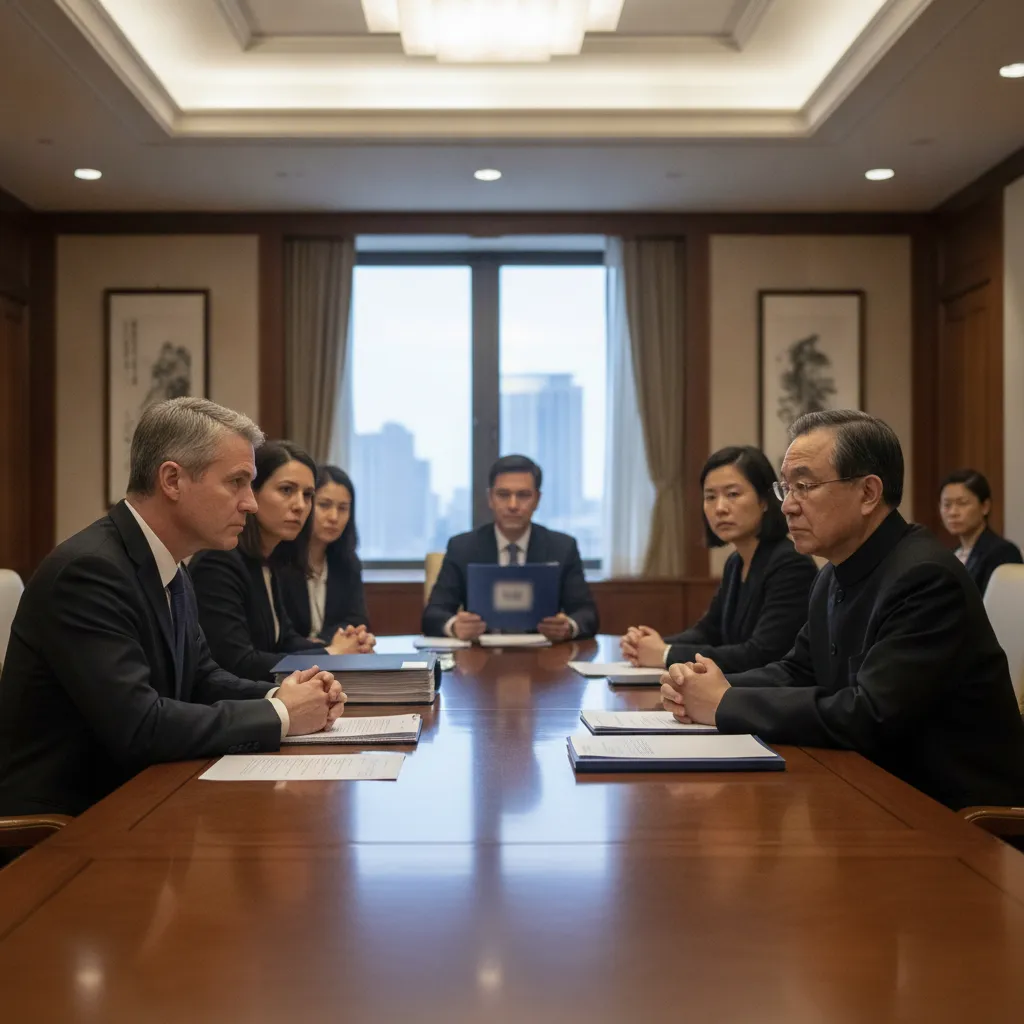
Tensions between the worlds two largest economies have resurfaced as top United States officials demanded that China immediately fulfill its obligations under the Busan trade agreement. During high level meetings on Friday, Treasury Secretary Scott Bessent and Trade Representative Jamieson Greer confronted Chinese Vice Premier He Lifeng over what they described as a lack of concrete progress. The US Treasury later released a statement making it clear that any future movement toward easing relations is entirely dependent on whether Beijing delivers tangible results rather than verbal assurances.
The dispute centers on a fragile pact brokered between President Donald Trump and President Xi Jinping, designed to dismantle a cycle of tit for tat tariffs and loosen restrictive grip on technology transfers. At the heart of the friction are specific targets regarding agricultural imports, with the White House previously noting that Beijing had committed to purchasing seventeen billion dollars in US farm goods annually starting in 2026, alongside existing agreements for soybean shipments.
Beijing appears to be playing a strategic game of reciprocity, suggesting that its willingness to increase these purchases is conditional. A spokesperson for Chinas Ministry of Commerce indicated that while they remain open to buying more American crops, such moves would only happen if both nations simultaneously execute an agreed upon reciprocal tariff reduction scheme known as the thirty billion for thirty billion arrangement.
For Secretary Bessent, the priority remains protecting domestic interests regardless of the diplomatic climate. In his closing remarks during the talks, he reiterated that the current administration will continue to pursue aggressive economic policies tailored to support American workers and farmers while safeguarding national security. As Washington monitors Beijings next steps, the stability of global markets continues to hinge on whether these two superpowers can bridge the gap between their conflicting conditions.