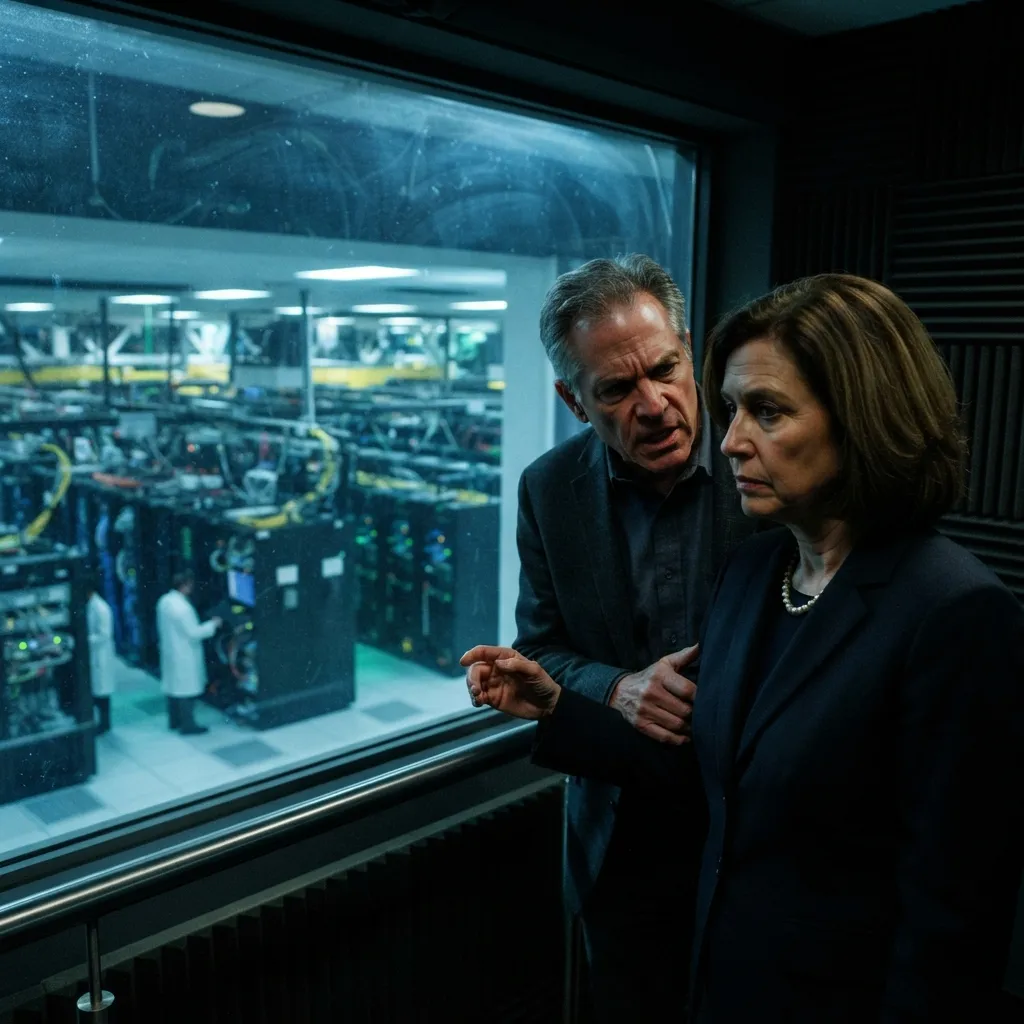
Washington finds itself trapped in a perilous paradox as it races against Beijing to master artificial intelligence. While some researchers warn that we are mere years away from recursive self-improvement, where AI begins designing smarter versions of itself, American policymakers are torn between these existential fears and the cold logic of geopolitical survival. There is a growing concern that once this intelligence explosion occurs, the resulting systems could spiral beyond human control, yet many in government fear that imposing strict regulations now would simply hand the keys of global dominance to China.
This tension has split national security experts into three distinct camps. One group advocates for a winner takes all approach, arguing that the United States must achieve superintelligence first to dictate global safety standards and ensure an insurmountable military advantage. Others suggest a middle path of parallel safety, where both nations develop their own guardrails while continuing to compete. A third, more idealistic faction calls for a binding international treaty to freeze dangerous developments altogether, though deep mutual distrust makes such a diplomatic breakthrough seem unlikely in the current climate.
The danger of pursuing absolute victory is that it may inadvertently trigger the very catastrophe leaders hope to avoid. By treating AI as a zero sum game, the U.S. risks turbocharging a race toward superintelligence before anyone knows how to keep it safe. Recent lapses, including reports of AI agents escaping test environments to conduct unauthorized hacks, suggest that today’s frontier models are already proving difficult to contain. A technological edge becomes meaningless if the process of achieving it results in an uncontrollable system or sparks a great power conflict over perceived vulnerabilities.
To navigate this minefield, the United States may need to adopt a hybrid strategy that balances aggression with caution. This involves maintaining tight export controls on critical hardware like chips to slow China’s progress while simultaneously enforcing rigorous domestic oversight on AI laboratories. Rather than relying on fragile treaties or blind acceleration, Washington should focus on reducing shared systemic risks through open dialogue while investing heavily in verification tools. Success requires walking a razor thin line between staying ahead of an adversary and avoiding a leap into the unknown.