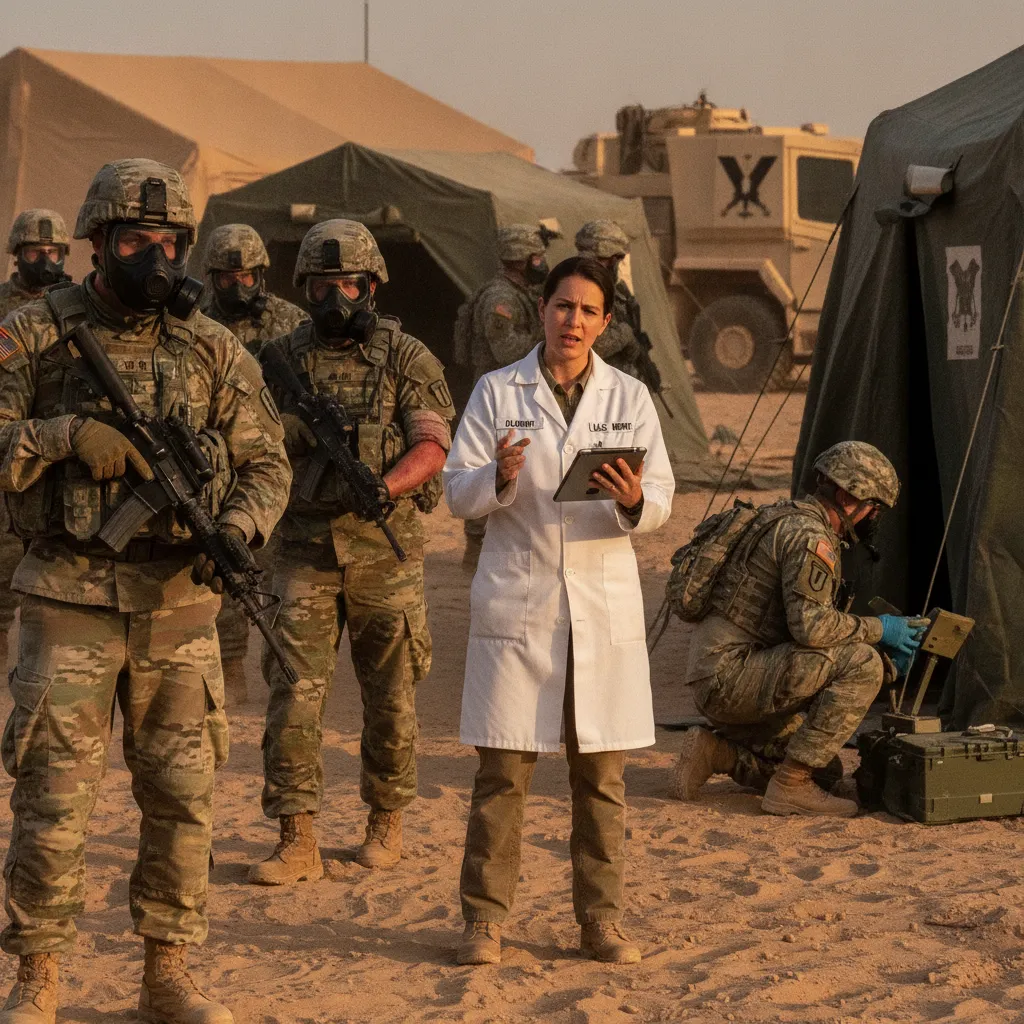
The United States Army has admitted that it is impossible to shield every soldier from every conceivable biological threat, prompting a fundamental shift in how the military prepares for modern warfare. Rather than attempting to prevent all exposure, a newly signed strategic plan focuses on teaching troops how to maintain combat effectiveness even while facing biological attacks. Dr. Alison Tamasi, a senior official at the Army’s Nuclear and Countering Weapons of Mass Destruction Agency, candidly noted that soldiers cannot simply be placed in bubbles, signaling an end to the era where bio threats were viewed exclusively as medical emergencies.
This pivot comes at a time of heightened anxiety over the intersection of artificial intelligence and biotechnology. Officials warn that these dual-use technologies, while beneficial for medicine, could allow adversaries to engineer novel pathogens with alarming speed. Concerns have been further stoked by reports of suspicious deaths linked to research facilities in Russia and warnings from intelligence experts regarding the exploitation of AI models for weaponization. While the Army maintains that its strategy is based on broad intelligence rather than a single enemy, the geopolitical climate suggests a narrowing window for traditional defense measures.
To implement this vision, the military is integrating biological warfare scenarios directly into routine combat training instead of keeping them confined to specialized exercises. Future drills will force commanders and logistics officers to solve complex operational puzzles under pressure, such as managing a simulated virus outbreak at a shipping port without halting the flow of critical supplies. By weaving these crises into standard maneuvers, the Army aims to ensure that leadership can prioritize mission success alongside casualty containment.
The overarching goal is to have the entire force capable of deploying and fighting within biologically contested environments by 2035. The initial phase of this rollout involves refining policy and cultivating specialized expertise across various branches of service. As technology continues to evolve faster than traditional safeguards, the Pentagon is betting that adaptability and resilience will be more effective tools than total prevention in an increasingly unpredictable landscape.