
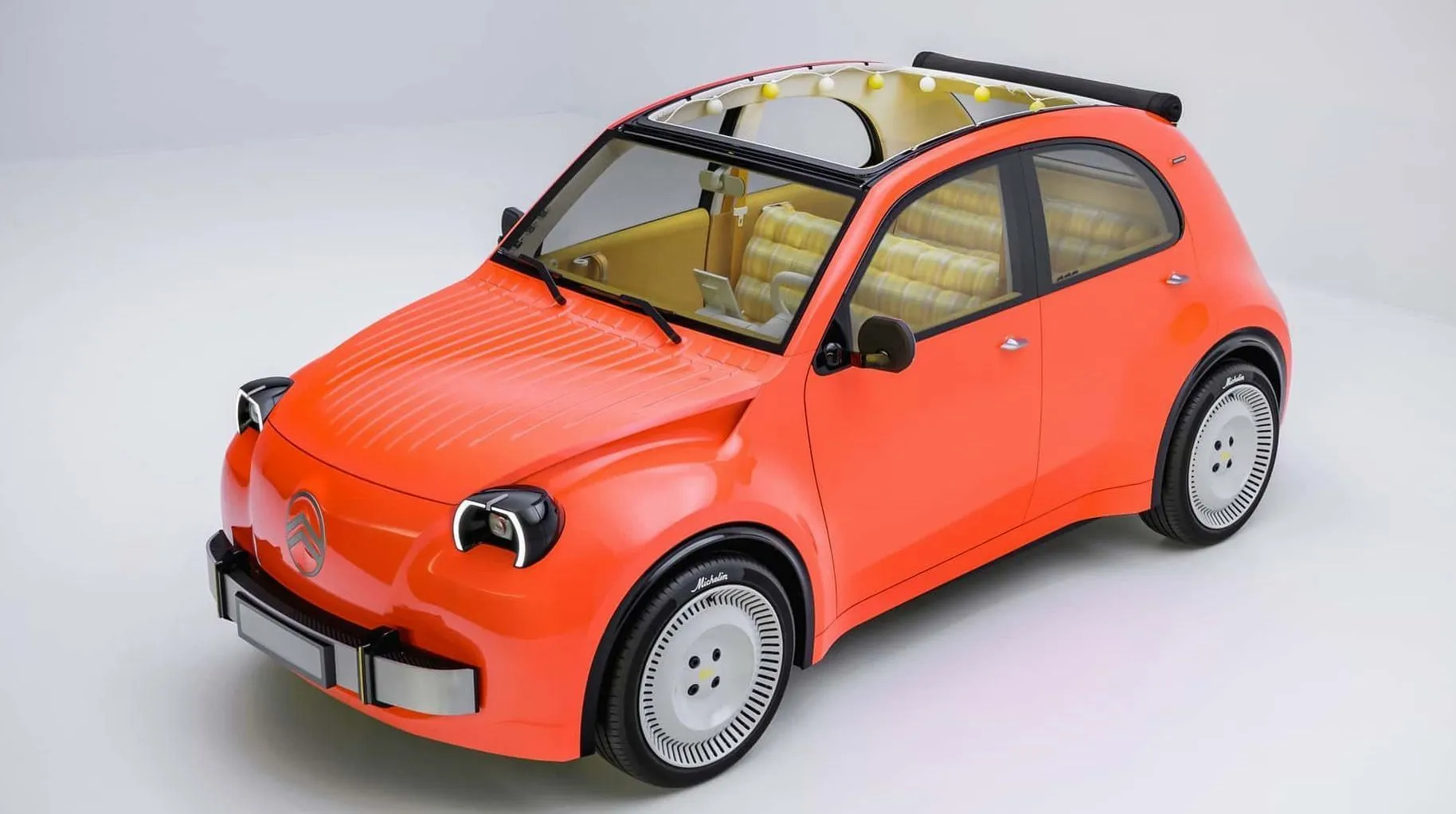
Citroen is preparing to fill a glaring gap in its current lineup by reviving one of the most beloved icons of French motoring. The brand recently unveiled a concept version of the electric 2CV, scheduled for a full debut at the 2026 Paris Motor Show. While many manufacturers have used retro styling to justify premium price tags, Citroen intends to stay true to the spirit of the original utilitarian vehicle by targeting a startlingly affordable starting price of around 15,000 euros when it hits production in 2028.
This ambitious pricing strategy puts Citroen in direct competition with the Renault Twingo E-Tech, potentially undercutting it by roughly 4,500 euros. To achieve this, engineers are focusing heavily on efficiency through minimalism. By aiming for a total weight of approximately one ton, the company hopes to utilize a smaller battery pack without sacrificing urban practicality. Though specific range and charging figures remain a secret for now, the goal is clearly to provide accessible mobility rather than luxury performance.
Visually, the new EV captures the essence of its ancestor without feeling like a mere caricature. It retains the signature rounded headlights, prominent fenders, and an upright windshield, all wrapped in a compact frame measuring 3.76 meters in length. Inside, the cabin embraces an airy philosophy with a stripped-back dashboard and innovative features like a Smart Vision Display and comic-style graphics on an eight-inch screen. In a charming nod to history, designers even included door pockets specifically sized for carrying eggs, referencing the original design brief of the mid-century classic.
Bringing such an affordable electric car to market requires more than just clever engineering; it requires political alignment. Citroen is designing the vehicle to align with proposed European Union regulations that could create a special category for small EVs under 4.2 meters. Such rules would freeze certain regulatory requirements for a decade, reducing development costs for manufacturers. At a time when automotive prices have soared globally, returning to these humble roots might be exactly what the market needs to make electric driving inclusive once again.