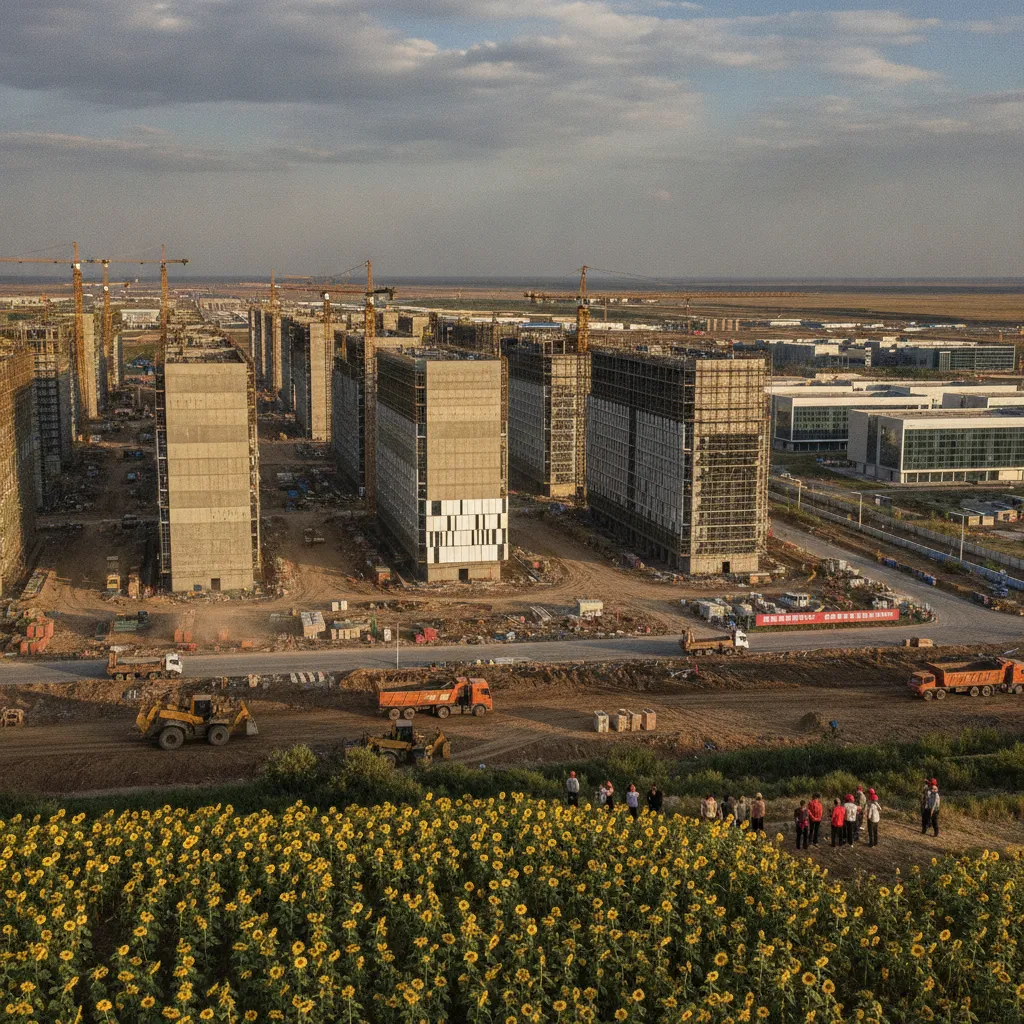
In the rolling plains of Inner Mongolia, a high-tech mirage is rising from fields of sunflowers and sorghum. In the city of Ulanqab, near the edge of the Gobi Desert, hulking blocks of data centers are appearing at a pace that seems almost impossible. From giants like Huawei to platforms like Kuaishou, the landscape is being transformed into a sprawling hub designed to fuel China’s ambitious leap into artificial intelligence. With nearly ninety data centers planned for a city of fewer than two million people, Beijing is attempting to solve a complex equation through sheer physical scale and speed.
While the United States currently holds a commanding lead in raw computing power and access to the world’s most sophisticated chips, it is facing internal friction that China simply does not encounter. Across America, plans for new data hubs often trigger fierce local opposition over land use and environmental concerns. In contrast, Ulanqab represents a streamlined vision of progress where public resistance is nonexistent. Local residents, such as small business owners who have seen their customer bases double overnight, generally welcome the noise and dust of construction as catalysts for economic growth in an otherwise agricultural region.
This rapid expansion serves as a strategic hedge against Western sanctions. Washington’s export bans on high-end Nvidia and AMD chips remain a significant bottleneck for Chinese tech firms, leaving them with less processing power per square foot than their Silicon Valley rivals. To compensate for this deficit in hardware quality and private capital, Beijing is leveraging its greatest strengths: vast tracts of land and an overwhelming surplus of green energy. By placing these centers in rural areas rich in wind and solar power, China is turning excess electricity into digital infrastructure.
Ultimately, this effort reflects President Xi Jinping’s broader goal to integrate AI into every facet of Chinese society, from healthcare to heavy manufacturing. While American firms may possess the superior tools today, China is betting that its ability to build faster and power those buildings more cheaply will eventually bridge the gap. For now, Ulanqab stands as a concrete testament to a strategy that prioritizes national mobilization over market caution, hoping that quantity will eventually evolve into quality in the global race for technological dominance.