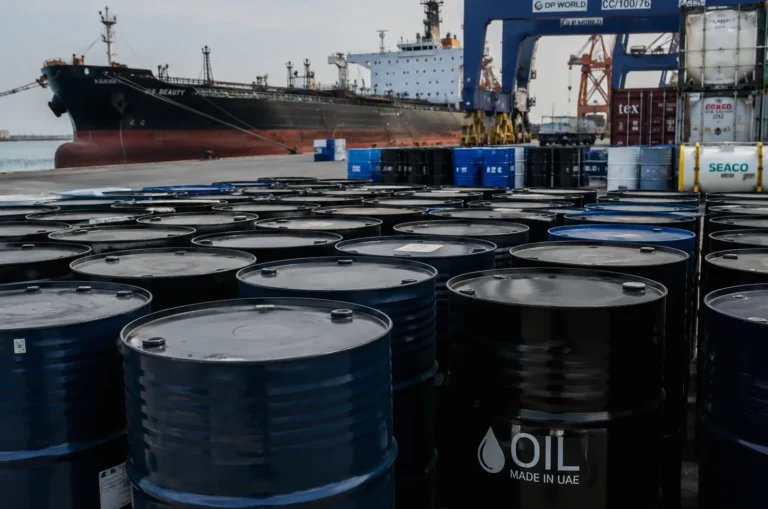
Oil prices fell on Thursday even as attacks around the Strait of Hormuz intensified, a sign that traders are demanding evidence of lost barrels before paying a larger geopolitical premium.
Brent crude dropped 1.7% to about $104.30 a barrel, while WTI slipped 1.1% to roughly $94.03.
The decline came after two commercial vessels sank near the strait within 24 hours and preliminary US industry data showed crude inventories falling by 11.1 million barrels.
Yet neither development sustained a rally. Instead, investors are focusing on recovering Gulf exports, higher Russian output and signs that expensive fuel is eroding demand.
Hormuz attacks are no longer enough on their own
The market’s muted reaction to escalating shipping risk is the clearest signal.
Attacks around Hormuz have increased over the past 10 days, while two vessels sank after separate projectile strikes. Iran has also said it is stepping up pressure on shipping as tensions with Washington intensify.
Phillip Nova’s Priyanka Sachdeva said in a client note that oil is still reaching buyers through alternative routes and logistical arrangements.
In her assessment, those workarounds are costly and fragile, but they have so far prevented the conflict from becoming a much larger physical supply shock.
That distinction matters, as traders are increasingly separating danger to ships from barrels actually disappearing from the market. Until attacks materially reduce exports, each new incident may generate a smaller price response.
Supply recovery is blunting the war premium
The market also has more barrels to work with than during the worst of the disruption.
Russia’s crude production rose by 65,000 barrels a day in September to 8.43 million bpd, while Middle Eastern crude exports increased by 4.4 million bpd to about 75% of prewar levels, according to the International Energy Agency.
Washington is meanwhile considering easing restrictions on some shadow-fleet vessels so legally permitted cargoes can move on previously sanctioned ships, potentially reducing freight costs and bottlenecks.
The response to US inventories underlines the shift in sentiment. American Petroleum Institute data showed crude stocks dropping by 11.1 million barrels last week, far more than expected, yet prices still fell.
Haitong Futures said in a note that the failure to rally on such bullish inventory news showed traders were reluctant to chase crude higher.
Weak demand is becoming the bigger oil-market story
The deeper pressure is coming from consumption.
The IEA now expects global oil demand to decline by an average 2.6 million barrels a day in 2026, with fourth-quarter demand down 2.5 million bpd from a year earlier.
Diesel is expected to account for a quarter of the annual drop as high fuel costs and weaker economic activity weigh on usage.
At the same time, global oil supply jumped 2.5 million bpd in September to 102.3 million bpd, driven largely by recovering Gulf production.
That does not mean Hormuz risk has disappeared. Morgan Stanley has raised its fourth-quarter Dated Brent forecast to $105 because tanker costs remain elevated.
Citi sees Brent potentially falling towards $65 by mid-2027 if shipping normalises, while assigning a prolonged-disruption scenario around $120.
The post Oil falls despite two tanker sinkings and 11.1M-barrel draw: what is market seeing? appeared first on Invezz