
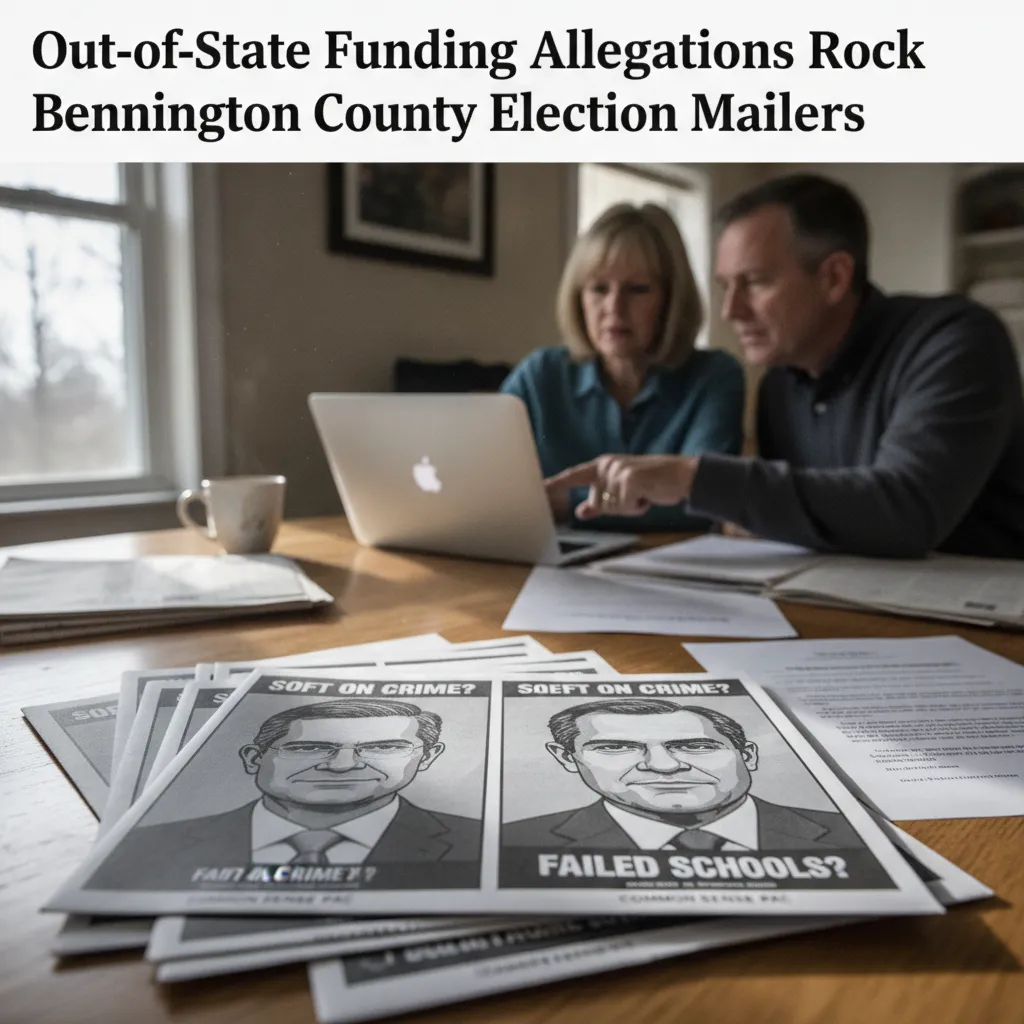
Residents of Bennington County are finding themselves at the center of a legal dispute after a series of aggressive political postcards sparked a formal complaint with the Vermont Attorney General. The mailers, distributed by an organization known as Common Sense PAC, targeted Democratic State Senators Seth Bongartz and Rob Plunkett. While the group framed its messaging around issues of crime, education, and taxes, Senator Plunkett described the advertisements as blatant mischaracterizations designed to smear his reputation through grandstanding tactics rather than substantive debate.
The controversy shifted from political rhetoric to potential legal violations when Bob Stannard, a former legislator, filed a complaint alleging that the PAC ignored state campaign finance laws. According to Stannard, the group failed to disclose major donors directly on the mailers as required by law. Specifically, he pointed to a ten thousand dollar contribution from Durin Systems LLC, a California based company that provided forty percent of the PAC’s funding. Under Vermont statutes, any contributor providing more than twenty five percent of funds must be named on electioneering communications so voters know who is financing the attacks.
Beyond the lack of transparency on the cards themselves, Stannard claims the PAC skipped mandatory reporting deadlines for mass media expenditures. He argues that because the spending occurred within the critical forty five day window before the general election, a detailed report should have been filed with the Secretary of State within twenty four hours. By omitting these filings and hiding out of state financial backing until later reports, Stannard contends that Common Sense PAC deprived Vermont voters of essential information during a pivotal moment in the electoral process.
Senator Plunkett expressed deep disappointment over what he sees as an infusion of toxic political culture into Vermont’s traditionally civic minded legislative environment. He warned that such high conflict attack ads could discourage qualified citizens from seeking office in the future. As the investigation moves toward Attorney General Charity Clark’s office, the case highlights an increasing tension between traditional local campaigning and the influence of well funded independent expenditure committees operating from across country lines.