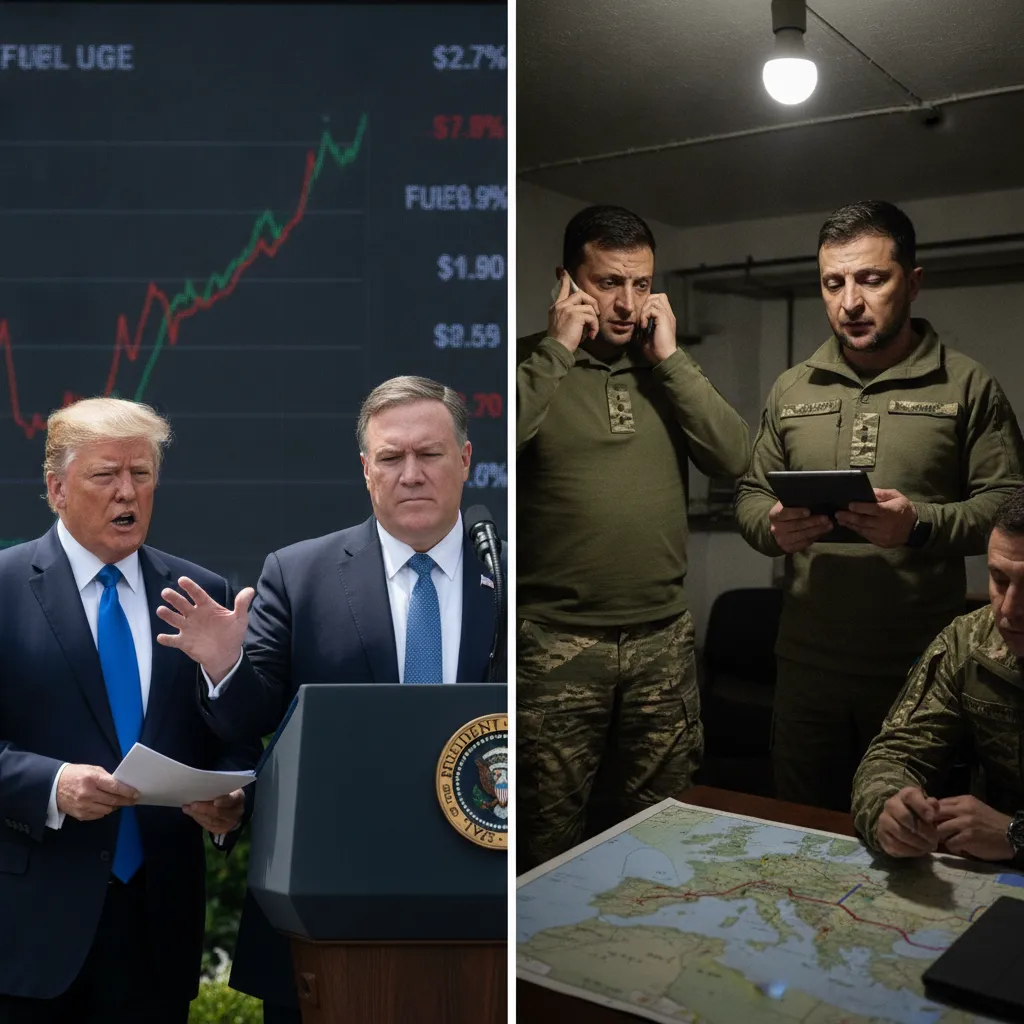
A sudden shift in Washington’s approach toward Moscow has left allies in Europe and Ukraine feeling betrayed following President Donald Trump’s announcement of a deal to purchase Russian diesel. This move, which requires a temporary lifting of sanctions, coincides with the president’s claim of an energy ceasefire between Russia and Ukraine. However, officials in Kyiv insist that such an agreement was never discussed with them, though they remain open to halting strikes on Russian energy infrastructure provided Moscow reciprocates.
Critics argue that the motivation behind the deal is purely domestic rather than strategic. Security experts suggest that President Trump is attempting to appease American voters struggling with high fuel costs ahead of the upcoming midterm elections. Despite these goals, analysts warn that the actual volume of Russian diesel entering the US market will be far too small to meaningfully lower prices at the pump, suggesting the deal is more about creating a favorable narrative for voters than achieving economic relief.
For Ukraine, the concerns go beyond economics. There is deep anxiety that revenues from these sales will fund Russia’s ongoing military efforts and that the US might leverage intelligence sharing or weapon procurement programs to force Ukraine into submission. While some experts believe the immediate military impact on Russia will be negligible, they emphasize that the symbolic damage caused by Washington cutting side deals with Moscow comes at a steep diplomatic cost.
Despite this executive pivot, there remains significant resistance within the US government itself. Bipartisan support for Ukraine continues to hold steady in Congress, where many lawmakers view the diesel deal as potentially illegal under existing laws designed to punish Russian aggression. As the midterm elections approach, political pressure from both Democrats and Republicans may act as a barrier against further unilateral concessions to the Kremlin.