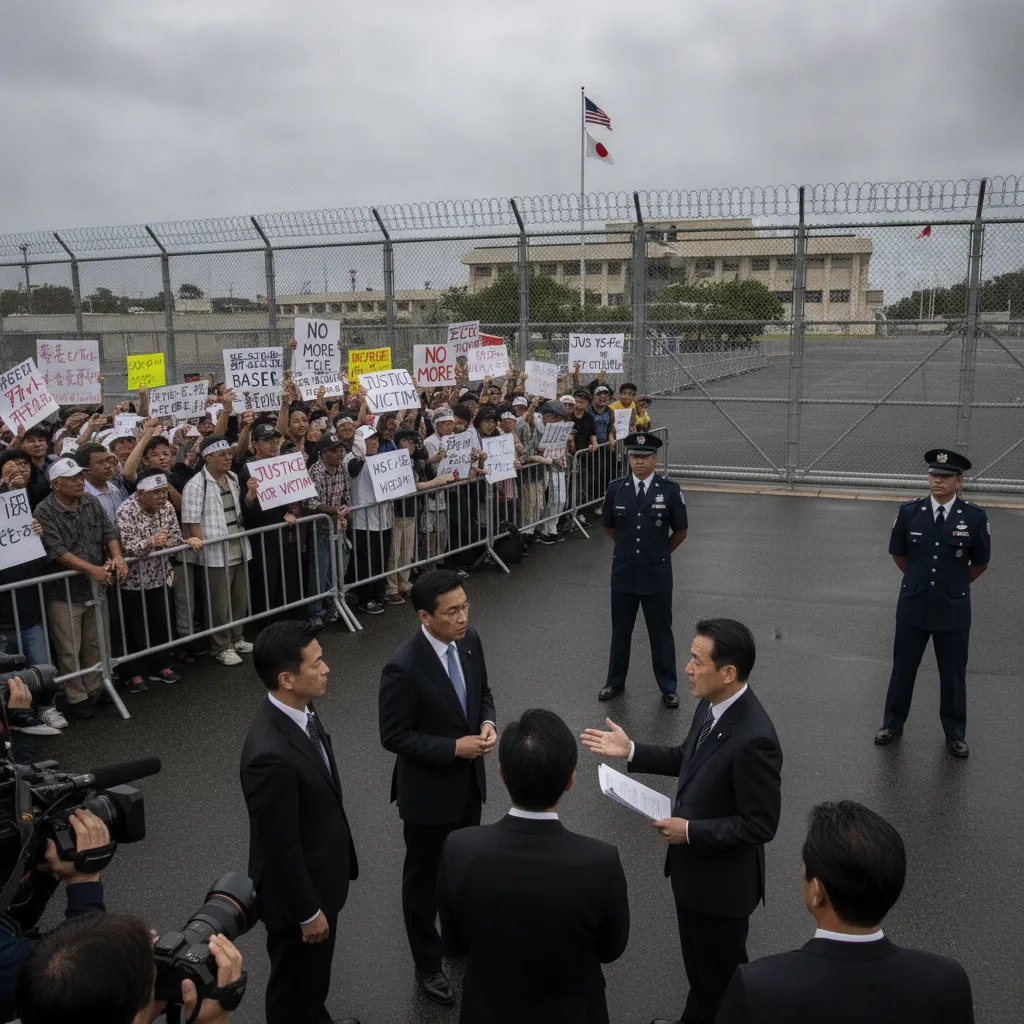
Japanese officials are launching a comprehensive review of behavior rules for American service members stationed in Japan after a U.S. Marine was arrested for the suspected murder of a 39 year old woman in Naha. The incident has reignited long standing tensions on the southern island of Okinawa, where residents have frequently protested against crimes ranging from assault to drunk driving committed by foreign troops. Foreign Minister Toshimitsu Motegi announced that the government is now questioning whether current regulations are actually working, signaling a shift toward stricter oversight of how soldiers spend their time off base.
The current framework, which was already tightened in 2024 following several reports of sexual violence, prohibits personnel from visiting bars or drinking in public between one and five in the morning. Despite these restrictions, the recent tragedy involving Devin Jacob Ballard has pushed leaders to consider more aggressive interventions. Discussions between Tokyo and Washington are expected to focus on enhancing patrol efforts and refining liberty policies that govern private activities. Following the arrest, the U.S. military implemented a brief operational pause and a monthlong overnight curfew to refocus on discipline and core standards.
Prime Minister Sanae Takaichi emphasized that high level consultations were initiated last week to determine what concrete steps can be taken to prevent future tragedies. While U.S. Secretary of State Marco Rubio expressed sincere condolences and pledged full cooperation with investigators, the event serves as a grim reminder of a volatile history. From previous convictions for rape and murder to violent assaults, criminal misconduct by U.S. personnel remains a significant diplomatic hurdle for two nations otherwise bound by a tight security alliance.
With roughly 54,000 military personnel stationed across Japan, most concentrated in Okinawa, the pressure on the central government to distribute this presence more evenly across other regions continues to grow. For many locals, this latest case is not an isolated event but part of a systemic pattern that requires more than just temporary curfews to solve. As investigations proceed into the death of the Okinawan woman, both governments face the difficult task of balancing strategic defense needs with the safety and dignity of the local population.