
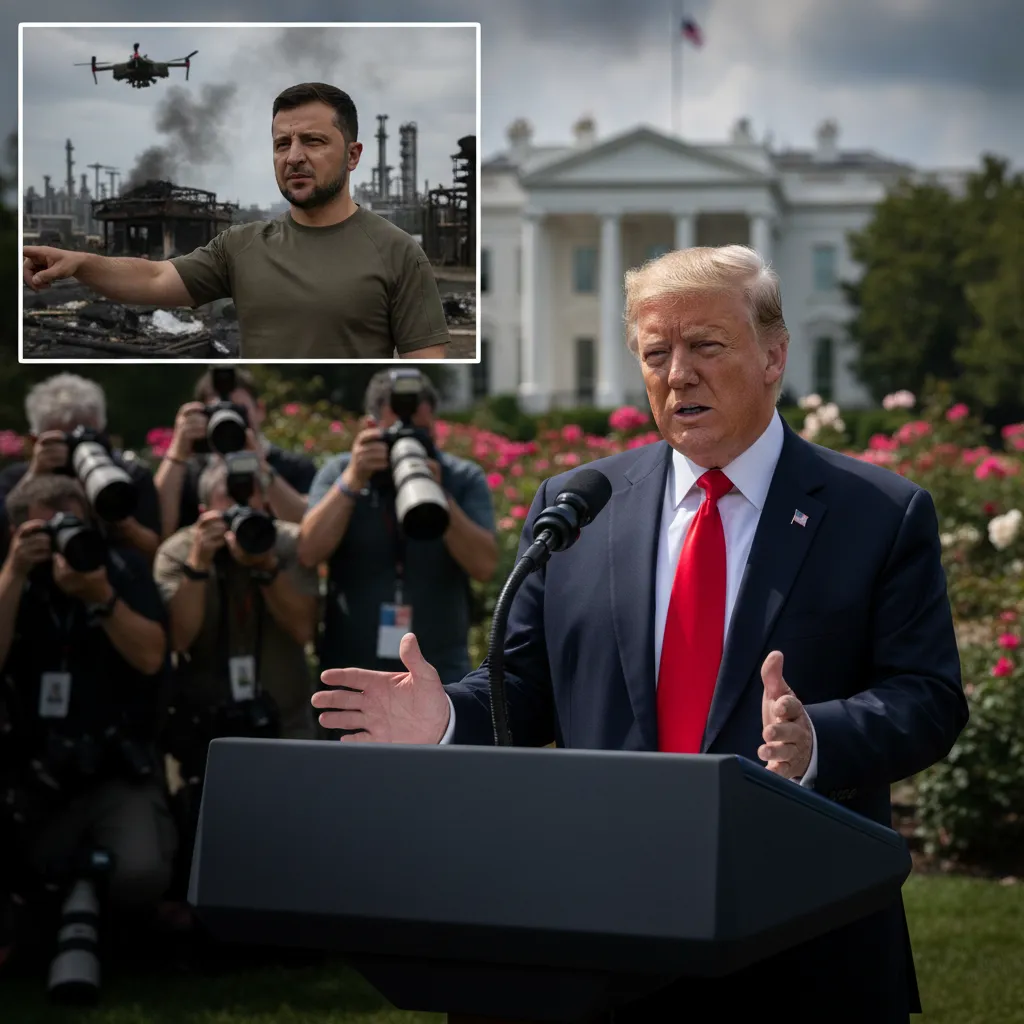
President Donald Trump ignited a fresh diplomatic firestorm this weekend, suggesting that Ukraine needs a new leader capable of making deals after clashing with President Volodymyr Zelensky over a controversial energy agreement with Russia. Speaking to reporters at the White House, Trump criticized Zelensky’s refusal to settle the conflict and questioned his leadership, specifically citing the Ukrainian president’s insistence on continuing drone strikes against Russian diesel refineries. These attacks had reportedly frustrated the White House, leading Trump to bypass traditional channels to secure a deal directly with Vladimir Putin.
The arrangement aims to stabilize global energy costs ahead of the midterm elections by bringing hundreds of thousands of tons of Russian diesel back into the market. While Trump touted the move as a win for the global economy, Zelensky slammed the decision as an investment in a war that should be ending rather than prolonged. The timing of the announcement was particularly stinging for Kyiv, coming just as a high level Ukrainian delegation arrived in Miami for talks with representatives of the Trump administration. Zelensky described the maneuver as a weak decision made by supposed strong partners.
Despite the political fanfare surrounding the deal, industry analysts remain skeptical about its actual impact on pump prices. Experts suggest that the volume of fuel promised by Putin represents only a small fraction of global demand and may be more of a political gesture than an economic game changer. Some former officials expressed doubt that Russia even possesses enough surplus diesel to fulfill the pledge given the extensive damage caused by Ukrainian strikes on its infrastructure. Furthermore, critics warn that easing restrictions on Russian energy exports significantly undermines existing sanctions meant to starve Moscow’s war machine.
As tensions mount, Trump has gone so far as to call for new elections in Ukraine, ignoring legal prohibitions against voting during wartime. He argued that Zelensky wants to create problems for the world rather than seeking peace. Meanwhile, those casualties continue to mount on the ground in Ukraine, where recent Russian missile strikes have devastated civilian areas and killed dozens. For Zelensky and his allies, the U.S.-Russia deal feels less like a strategic pivot toward stability and more like a betrayal delivered at their most vulnerable hour.