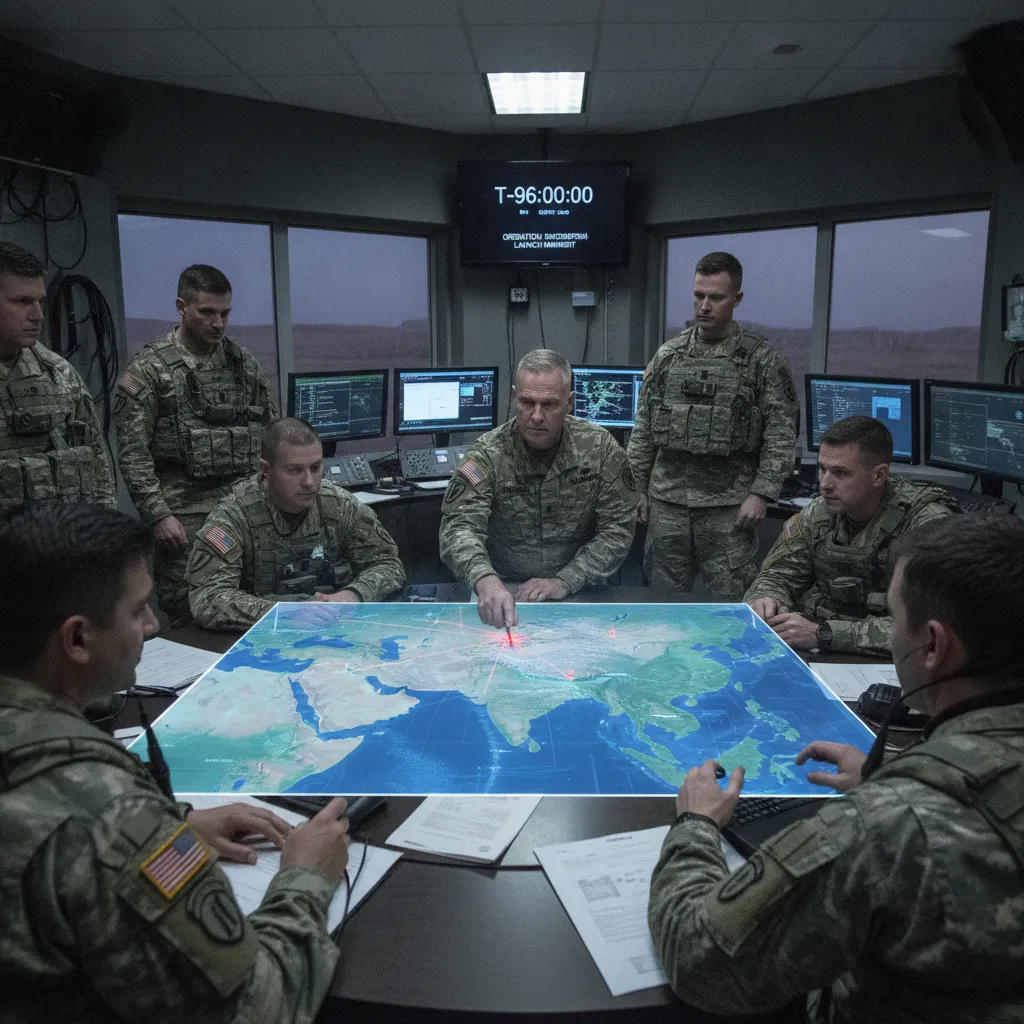
United States military forces stationed in the Middle East are reportedly standing by to launch significant offensive operations against Iran within ninety six hours of a presidential order. According to officials familiar with the situation, the deployment currently in place is sufficient to move beyond routine containment efforts and instead execute a large scale campaign. Unlike previous limited strikes aimed at radar systems or missile launchers, these proposed operations would target critical Iranian energy infrastructure, military installations, and nuclear facilities.
While the White House has remained silent on specific timelines, insiders suggest that President Donald Trump may be leaning toward such action following the upcoming midterm elections. Some officials believe a strike is inevitable rather than just possible, although they acknowledge the president’s history of oscillating between aggressive rhetoric and last minute restraint. Meanwhile, the Pentagon maintains that its primary role is to ensure all viable military options are planned and ready for execution should the commander in chief decide to proceed.
Intelligence reports indicate that Tehran and its Houthi allies are acutely aware of these possibilities and are preparing for immediate retaliation against American personnel throughout the region. This heightened tension has already prompted the U.S. government to begin quietly scaling back embassy staffing across several Middle Eastern capitals and halting the deployment of nonessential military rotations. These precautions signal a growing concern that any direct hit on Iranian soil could trigger a widespread regional escalation.
Adding another layer of complexity is the pressure from Israeli Prime Minister Benjamin Netanyahu, who has reportedly pushed for joint strikes against Iran. While coordination continues, some sources claim that concerns over domestic political stability in Israel helped stall earlier attempts at cooperation. As Admiral Brad Cooper recently surveyed the volatile waters of the Strait of Hormuz, it became clear that without a sudden diplomatic breakthrough, the current stalemate remains unsustainable for Washington.