Americans may say they want healthier restaurant meals, but getting them to choose a salad over a burger, sandwich, or another convenient option is a challenge.
For restaurant chains built around fresh ingredients and premium-priced meals, the pressure has only intensified as customers rethink how frequently they eat out and how much they spend when they do.
According to the National Restaurant Association, 44% of restaurant operators reported declining customer traffic in September compared with a year earlier.
Also read: Sweetgreen closes 9 restaurants, plans more shutdowns in 2027
Sweetgreen, which built its business around salads and customizable grain bowls, has experienced that pressure firsthand.
The chain reported a 6.4% decline in comparable restaurant sales during the third quarter, including a 4.9% drop in customer traffic, according to its November 5 earnings release.
Daniel Kline, retail expert and co-editor-in-chief of TheStreet, offered a particularly critical assessment of the chain’s core business.
“A business doomed to fail. Nobody wants salad for lunch and that as a core business is just stupid,” Kline said.
His criticism reflects a central challenge for Sweetgreen: convincing diners that the chain offers enough variety, convenience and value to compete with other fast-casual restaurants.
Sweetgreen is now attempting to change that perception through a broader transformation involving its menu, pricing, restaurant operations, employee training and digital rewards.
Sweetgreen’s Project One Best Way changes how restaurants serve customers
One of Sweetgreen’s biggest challenges is delivering a consistent experience across its restaurants.
“It is a clear reminder that two restaurants can have the same menu, equipment, and systems and still deliver very different experiences,” CEO Jonathan Neman said during the earnings call.
That observation is driving Project One Best Way, an initiative introduced in 2025 to standardize food preparation, staffing, kitchen operations and service during busy periods.
More Restaurants:
- 40-year-old fast-food franchisee files for Chapter 11 bankruptcy
- Landry’s rescues 9 restaurants from bankruptcy as closures mount
- Outback Steakhouse restaurant franchisee files for Chapter 11 bankruptcy
The company has been changing how employees prepare orders, organize kitchen stations and serve customers during lunch and dinner rushes.
During a June consumer-industry conference, CFO Jamie McConnell explained that employees previously handled orders by accompanying individual customers down the service line. The company has been moving toward a more assembly-line-style process to serve customers faster.
However, management believes technology and procedures alone cannot guarantee a better restaurant experience.
“The difference is the head coach,” Neman said.
Sweetgreen refers to its general managers as Head Coaches, emphasizing their responsibility for developing employees and maintaining customer satisfaction.
Neman highlighted the chain’s Wynwood restaurant in Miami, where a manager named Dee has helped the location outperform others in its region across sales, service speed and profitability.
Sweetgreen is now expanding employee training, particularly in food preparation, cooking, hospitality and handling busy periods.
Sweetgreen puts Plates back in focus, adds new chicken dishes to menu
Beyond restaurant operations, Sweetgreen is making a significant push to become a dinner destination.
“Our next major focus is making Sweetgreen a stronger choice for dinner,” Neman said.
The chain has traditionally been associated with salads and bowls purchased during lunch, with sales after 5 p.m. accounting for only about one-third of its business.
Sweetgreen first introduced its Plates category in 2023 to offer more substantial meals. Now, the company is renewing that strategy with bigger portions, updated recipes, and new menu items intended to appeal to customers looking for warm dinners.
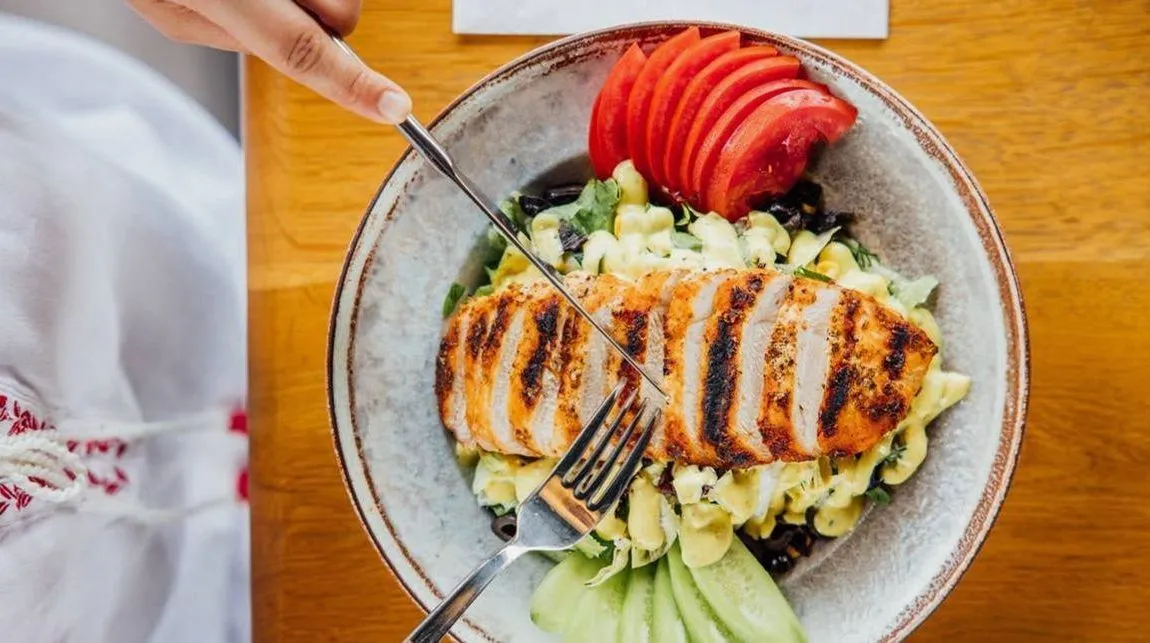
On November 10, Sweetgreen officially launched a revamped Plates menu, introducing Rotisserie-Seasoned Chicken made with boneless chicken thighs marinated overnight in a miso-maple mixture and roasted in its kitchens.
The new chicken portions are approximately 50% larger than the company’s standard serving.
Two new Plates feature the protein:
- Jammy Sunday Chicken: Rotisserie-seasoned chicken with umami rice, spicy broccoli, roasted sweet potatoes, sweet onion jam and green goddess dressing.
- Wild Chicken Bello: Chicken with wild rice, roasted sweet potatoes, portobello mushrooms, cabbage slaw and charred jalapeño ranch.
A new Umami Chicken Rice Wrap also joins the menu, while existing favorites, including Hot Honey Chicken and Miso-Glazed Salmon, received recipe updates.
The company has also introduced its first Sourdough Chocolate Chip Cookie, baked fresh daily in restaurants using sourdough starter, dark chocolate, butter, organic agave syrup, and coconut sugar.
“We love a good salad here at Sweetgreen, but sometimes you just need a plate of something warm and hearty,” Chief Commercial Officer Zipporah Allen said in the launch announcement.
The new items are available at most Sweetgreen restaurants, although some Boston-area locations will not offer the new rotisserie-seasoned chicken dishes.
The changes are built on Sweetgreen’s earlier appointment of former Shake Shack executive chef John Karangis, who is helping expand the chain’s menu beyond traditional salads.
Sweetgreen tests a new pricing system for customized bowls
When it comes to eating outside, pricing is key, and customers want to feel their money’s worth. Sweetgreen has understood this and is reconsidering how customers pay for meals.
One of the chain’s challenges has been the perception that customized bowls become too expensive once shoppers add protein and premium ingredients.
Under its traditional ordering system, customers could select a base and toppings but incurred extra charges for customization.
Sweetgreen is testing a redesigned Create Your Own pricing structure that would provide a clearer starting price that includes protein and make additional charges for premium ingredients more transparent.
For example, instead of choosing a bowl and discovering that adding chicken substantially increases the price, customers would be able to see a more complete starting price before customizing their meals.
Similar to the bowls’ pricing at Chipotle, Cava, Naya, or Inday, where a fixed price, inclusive of base and protein, is clearly listed. Then if you add premium ingredients, the amount gets added to your final bill.
During the earnings call, Neman said the redesigned system had been in testing for approximately 90 days at about 70 restaurants.
“What we do know is customers love the transparency of it,” Neman said.
Related: Publix brings back annual customer discount amid declining sales
He added that the company has observed an increase in customer visit frequency but wants to determine whether those additional visits offset any reduction in average spending.
Sweetgreen could begin a broader rollout during the first quarter of 2027, depending on the results.
The company is also reducing its reliance on temporary discounts and offering more lower-priced everyday options, including selected salads and wraps priced around $11 to $13 alongside premium meals in the $15 to $17 range.
That approach comes as the chain increased menu prices by approximately 3% in September to offset inflation.
Sweetgreen works on food wastage and members’ rewards
Other changes are happening behind the scenes regarding food waste and preparation to improve cost efficiency.
“We were wasting a lot of food at the end of the day,” McConnell acknowledged during the earnings call.
Sweetgreen had been preparing full batches of food even during slower periods, sometimes leaving excess food at closing. Restaurants are now testing smaller, more frequent cooking batches and daily inventory checks for critical ingredients.
Management believes improved inventory management and food preparation could increase restaurant-level profit margins by approximately 1.5 percentage points in 2027.
Sweetgreen is also overhauling its digital experience.
The company redesigned its mobile app in September to simplify navigation, highlight new menu items and improve personalized recommendations.
Changes to its SG Rewards program have helped increase monthly reward redemptions by 50%, according to management.
In 2027, Sweetgreen plans to move beyond traditional points-based rewards and introduce more experiential benefits, potentially including exclusive tasting dinners for certain loyalty tiers.
The chain is also preparing six major marketing initiatives next year, supported by smaller product launches and chef collaborations. Neman said the company wants to focus on “fewer, but bigger, better things,” allowing restaurant employees more time to prepare for new menu introductions.
Whether Sweetgreen’s strategy can convince customers to return consistently remains uncertain. For now, the company is slowing restaurant expansion to concentrate more resources on improving existing locations.